
Visiting Buddhist Temples in Thailand
Etiquette, Dress Code & Cultural Guidelines
Etiquette for Visiting Buddhist Temples in Thailand
Visiting Buddhist temples in Thailand is a unique cultural experience, but it also requires an understanding of local etiquette and respect. As sacred spaces used for worship, temples follow specific customs regarding behavior, dress, and interaction with monks. Learning these guidelines helps ensure a respectful and meaningful visit.
Table of Contents
ToggleWhy Temple Etiquette Matters in Thailand
Thailand is a predominantly Buddhist country, with temples playing an important role in daily life and spiritual practice. Monks are highly respected, and temples are considered sacred spaces rather than tourist attractions.
For visitors, understanding and following temple etiquette is not just about politeness, it reflects respect for local culture, religion, and tradition. Even small actions can be seen as either respectful or inappropriate depending on how they are perceived within Thai society.
Temples are often peaceful environments used for meditation and prayer, and maintaining this atmosphere is an important part of respectful conduct. We will cover some of the Basic Do’s and Don’t when visiting a Buddhist Temple in Thailand, and then extend those protocols if you are lucky enough to be getting a Sak Yant by a Monk at a Thai Temple.
Importance of Etiquette for Visiting Buddhist Temples
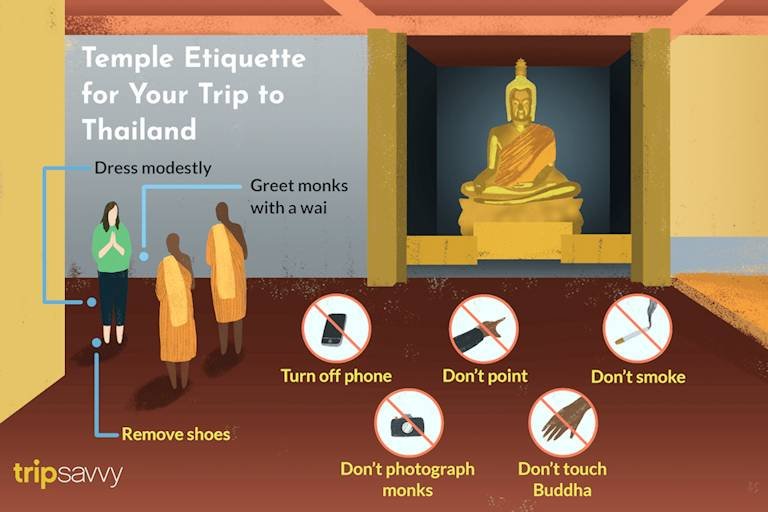
Some of these rules for visiting Buddhist Temples in Thailand are common sense and others might seem odd to the foreigner visitor. Never the less, being disrespectful to the Temples and Monks is an indiscretion you do not want to make during your travels.
Always keep in Mind, no matter how liberal the country is where you come from – there is a class system in Thailand – You are NOT EQUAL to a Monk. Think about how you would act towards a judge in a court of law, who looks as if they might let you off with a warning for some indiscretion, and is just waiting for you to give them any reason to throw the book at you.
There are certain things you need to do and don’t do when you go to visit a Thai Temple or you have an audience with a Thai Monk. This is especially true when requesting a Sak Yant Tattoo.
Rules to Visit a Buddhist Temple in Thailand
1) General Behavior Inside a Buddhist Temple
Remove Distractions
When entering a temple, it’s important to remain calm, quiet, and respectful of the environment.
Visitors should:
- Speak softly and avoid loud conversations
- Turn off or silence mobile phones
- Remove hats and sunglasses when entering indoor areas
- Avoid smoking, chewing gum, or inappropriate behavior
You are entering a consecrated area, where locals go to commune with the sacred, so any hint of irreverence might cause deep offense.
Respecting Buddha Images and Sacred Spaces
Buddha statues are among the most sacred elements within a temple and should always be treated with respect.
Visitors should avoid:
- Touching or climbing on Buddha statues
- Sitting higher than a Buddha image
- Turning their back directly toward a Buddha when close
It is also considered disrespectful to point at Buddha images or monks, especially using your feet, which are viewed as the lowest and least clean part of the body in Thai culture
Don’t Point
You should not point, either with fingers or feet, at a monk or Buddha statue or even other people. To indicate something, use the right hand with the palm facing upwards. Feet are considered the lower and dirty part of the body. When sitting, men should cross their legs and women should kneel with their toes backwards. Pointing at things or people around the temple is considered extremely rude. . When sitting, never point your feet at a person or image of Buddha.
No Public Displays of Affection.
Public displays of affection is considered low class behavior in Thai Culture. It goes without saying that visiting a Buddhist Temple in Thailand you are on holy grounds. Reframe from this cultural taboo especially at a Buddhist Temple
Dress Code for Visiting Buddhist Temples
Most tourists can forget this rule due to the heat in Thailand. One of the most important aspects of temple etiquette is dressing appropriately.
Visitors are expected to:
- Cover shoulders and knees
- Wear modest, non-revealing clothing
- Avoid overly tight or transparent outfits
Shoes must be removed before entering temple buildings, and hats and sunglasses should also be taken off indoors.
While some larger temples may provide coverings for visitors, it is best to arrive dressed appropriately to avoid inconvenience.
Women should wear skirts longer than knee length or long pants. Long pants should be worn by men too. Both, men and women should cover their shoulders. Sandals are acceptable in some temples. Clothing shouldn’t be too loose or too tight for it to be convenient for worshiping and meditation.
Clothes in plain colors are recommended. Black is a funeral color so best to not wear black clothing. If you visit the temple wearing unsuitable clothes, some bigger temples may provide you clothes to cover yourself up properly for a small fee.

3) Etiquette When Interacting with Monks
Greet the Monk with a Wai
Monks hold a respected position in Thai society, and there are specific customs when interacting with them.
When meeting a monk:
- Greet them with a wai (traditional Thai greeting)
- Keep your head lower than theirs when seated
- Avoid physical contact unless clearly appropriate
Women should be aware that, in many cases, monks avoid physical contact as part of cultural and religious practice. While the rules can vary in interpretation, maintaining distance is considered respectful in most temple settings.
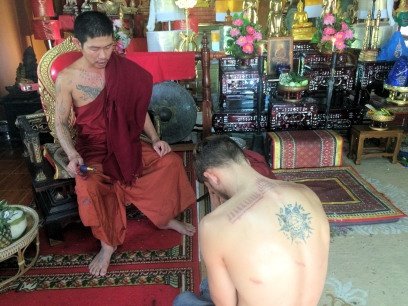
Remain Lower than the Monk
Buddhist Monks at Thailand Temples hold a position of authority. One of the things you do to show your acceptance of this is to always remain lower than the Monk. When they are seated on a raised platform you sit in front of them in a sitting or kneeing position
Don’t Eat
Monks have to eat before noon, so be mindful that snacking on food and drink in their presence is considered impolite.
Women do not Touch Buddhist Monks in Thailand
You may have heard, Monks don’t touch women, including his own mother. This is a misunderstood aspect. Buddhist Monks can not touch a women if it is likely to invoke sexual thoughts or distraction from their devotion. Obviously their are old Monks, Gay Monks and Monks with sufficient purity that this is not an issue. Look at any photo of the most famous Monk in the world the Dali Lama. He is always touching females.
However in Thai culture they go the extra step of looking badly on holy men touching females, so many Monks just don’t to avoid local gossip and any potential trouble. This is particularly true in the Temple grounds.
Do’s and Don’ts Etiquette when Visiting Buddhist Temples
Dos for Visiting Buddhist Temples in Thailand
- Do remove hats, sunglasses, and shoes when entering a worship area.
- Do silence your mobile phone, remove headphones, and lower your voice.
- Do show respect; now is not the time to share the latest joke you just heard.
- Do step over the wooden threshold to the temple rather than on top of it.
- Do stand up when monks or nuns enter the room.
Don’ts for Visiting Buddhist Temples in Thailand
- Don’t point at a monk or Buddha statue, either with fingers, feet, or something in your hands.
- Don’t touch or turn your back to an image of Buddha.
- Don’t smoke, spit, chew gum, or snack while walking around. Many Theravada monks do not eat after noon.
- Don’t disturb monks or anyone else who came to worship.