
What is a Bamboo Tattoo?
Bamboo Tattoo Thailand: What It Really is (And Why It’s Often Confused with Sak Yant)
A Bamboo Tattoo is a type of hand-poked tattoo created using a long rod or stick instead of a modern tattoo machine. The technique is widely used across Thailand and Southeast Asia, especially in tourist tattoo studios.
However, the term “bamboo tattoo” is also one of the most misunderstood phrases in tattoo culture. It is often incorrectly used to describe Sak Yant, Thailand’s sacred tattoo tradition performed by monks and Ajarns. While both may use similar tools, they are not the same thing. Understanding this difference is essential before getting a tattoo in Thailand.
The Allure of the Traditional Thai Sak Yant in Thailand
The ‘Traditional Thai Tattoo’ has gained popularity as unique souvenirs, allowing travelers to carry a piece of Thailand’s culture back home. These tattoos are promoted as not just art; they imply a connection to the country’s spiritual heritage, drawing inspiration from traditional Sak Yant designs. However the connection between Traditional Thai Tattoo’s (Sak Yant) and Bamboo Tattoo’s done by Tattoo Artists for Tourist’s has never existed.
Let’s look at how the Bamboo Tattoo started, and became widely sort after in Thailand from Tourists – often mistaking it for the Sak Yant Tattoo.
Table of Contents
ToggleWhat Is a Bamboo Tattoo?
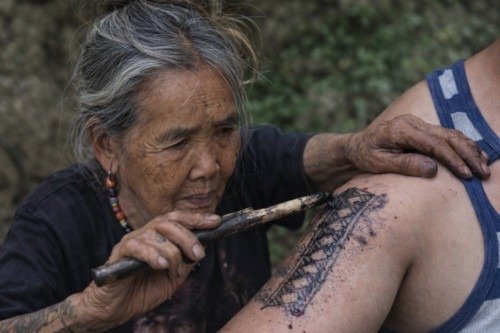
A bamboo Tattoo refers to the method, not the meaning.
Instead of an electric machine, the artist uses a sharpened rod, traditionally bamboo to manually tap ink into the skin. This Traditional method using Bamboo is historically used in Japanese and Philippine Tattoo Cultures. However – Thailand has been processing metal for over a 1000 years and the Monks who did Traditional Thai tattooing for their Sak Yants have never used Bamboo.
In Thailand the adoption of the Bamboo Tattoo Hand Poke method is very new, dating only back to 2003. The Bamboo Tattoo technique is commonly used in Thailand:
Tourist Tattoo shops
Decorative tattoo studios
Non-spiritual tattoo environments
In these settings, a bamboo tattoo is simply a different way of applying ink, nothing more
Why Bamboo Tattoo Is Often Confused with Sak Yant
The confusion comes from history, tourism, and marketing. In the early 2000s, Thailand’s traditional tattoos gained global attention. Media and travel blogs began using the term “bamboo tattoo” as a simplified way to describe what they didn’t fully understand.
Over time, this led to a widespread misconception: That all bamboo tattoos are sacred or spiritual. …. They are not.
A Sak Yant tattoo is defined by:
- A trained Ajarn or Monk
- Sacred geometry and script
- A ritual blessing that “activates” the tattoo
The tool used is secondary.
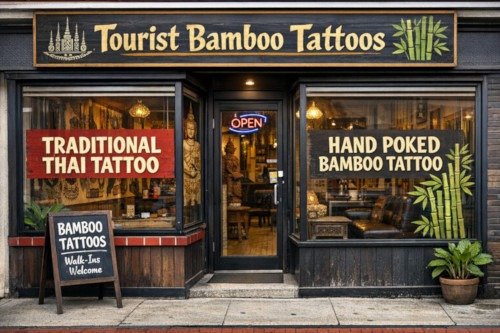
In the early days of modern tattooing in Thailand, non-sacred tattoos, much like in many parts of the world, were often associated with the margins of society. As the industry began to grow, tattoo artists focused on reshaping that perception by introducing modern equipment, contemporary designs, and higher hygiene standards.
To appeal to a broader audience, many studios positioned themselves as modern, safe, and distinct from older tattooing traditions. As a result, traditional hand-poke methods, including bamboo tattooing, were not widely offered in commercial tattoo shops at that time.
Before the early 2000s, it was uncommon to find tattoo studios in Thailand promoting traditional hand-poked bamboo tattoos as part of their services. These methods were largely outside the mainstream tattoo industry and not yet part of the modern studio identity.
If you look at the establishment dates of many studios today that advertise bamboo or traditional Thai tattooing, most began incorporating or promoting these styles in the mid-2000s and beyond.
The Key Difference Between a Bamboo Tattoo and a Sak Yant: Technique vs Meaning
This is where most people get it wrong.
| Aspect | Bamboo Tattoo | Sak Yant |
|---|---|---|
| What it is | A tattoo technique (hand-poked method) | A sacred spiritual practice |
| Primary Focus | How the tattoo is applied | The meaning and blessing behind it |
| Who Performs It | Tattoo artist | Ajarn or monk |
| Spiritual Element | ❌ None | ✅ Essential |
| Blessing / Activation | ❌ Not included | ✅ Core part of the process |
| Purpose | Decorative / aesthetic | Spiritual, symbolic, personal transformation |
| Cultural Role | Modern tattoo variation | Ancient Thai spiritual tradition |
Why Bamboo Tattooing became popular in Thailand
1) Angelina Jolie’s 2003 Sak Yant Tattoo
n 2003, Angelina Jolie received her first Sak Yant tattoo, bringing global attention to Thailand’s traditional tattoo culture. International media often mistakenly referred to it as a “bamboo tattoo,” drawing on comparisons with hand-poked techniques used in other countries such as Japan and the Philippines.
This exposure sparked growing interest among travelers, many of whom came to Thailand seeking a similar experience. As demand increased, tattoo studios began responding to requests for “bamboo tattoos,” adapting their tools and techniques to meet expectations.
Early on, the hand-poked method was most commonly associated with Sak Yant-style designs, while other tattoos continued to be done with modern equipment. Over time, however, the technique became more widely applied across a broader range of styles.
As tourism expanded, the term “bamboo tattoo” became more commonly used, and its meaning broadened. What originally referred to a technique began to overlap with traditional and spiritual practices in the public perception.
Within a relatively short period, this blending of ideas, between Sak Yant, traditional tattooing, and bamboo techniques – became widespread, and many tattoo studios began offering bamboo tattooing as a core part of their services.

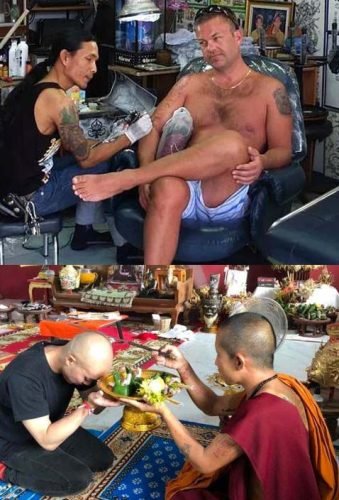
2) Marketing of the Traditional Hand Poked method as “Bamboo Tattoo”
Terms ‘Bamboo Tattoo” and “Traditional Thai Tattoo” are used together almost exclusively by
- Tattoo Artists and Shops who originally and intentionally promoted the term ‘Bamboo Tattoo’ after it was used in western media to describe Angelina Jolies Thai Sak Yant in 2003. Tattoo Shops continue to make an association between their ‘modern take’ and ‘art’ and the significance and history of the Real Sak Yant Experience.
- Travel Bloggers/Vloggers writing articles highlighting their Hand Poked Bamboo Tattoo in Thailand experience. Not having the time to investigate they copied and pasted incorrect existing information, confusing the genuine Spiritual Sak Yant Tattoos with the normal tattoo ‘art’ they received at the tattoo shop.
As Early as 1881 in Carl Bocke book 'Temples and Elephants', we know that the traditional Thai Tattoo was applied using a solid steel needle. So why does the idea that a Bamboo Tattoo is the same thing as a Traditional Thai Tattoo when it is not?
Almost all information you find online about the History of Bamboo Tattoos using an association between the Traditional Thai Tattoo’s or Hand Poke Tattoos are incorrect. Articles, Blogs and various media will intermingle fact and fiction
1) The Traditional Thai Tattoo was done using a Bamboo Needle using a hand poked method. – False
2) That these Traditional Thai Bamboo Tattoos were highly prized and magical talismans performed by Monks. – True … And that
3) Using this traditional and ancient hand poked method you can also benefit from the magic powers and spiritual significance because they use the same designs and methods. – False
For all the academic references and greater detail you can go to a website created by Sak Yant enthusiasts here at bambootattoos.com
Why This Matters Before Getting a Tattoo in Thailand
Many travelers come to Thailand looking for:
A meaningful experience
A spiritual connection
A traditional Sak Yant
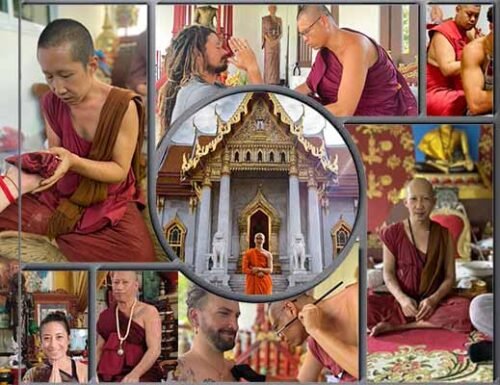
But often end up with:
A decorative tattoo from a shop
No blessing
No understanding of the design
Sense of betrayal and dissapointment
A bamboo tattoo is best suited for those who are drawn to the technique and experience of hand-poked tattooing rather than the spiritual meaning behind it. It’s also a good option for travelers who want a unique tattoo experience in Thailand, but are primarily focused on the visual result.
Bamboo tattoos are widely available in tattoo studios, offering flexibility in design, placement, and style. This makes them ideal for those who want creative freedom while still trying something that feels different from a standard machine tattoo. The Bamboo Tattoo from a Tattoo shop is not for those who are seeking the Traditional Thai Sak Yant Tattoo and the Spirituality, Rituals and Cultural behind them.
Thailand Tattoo Shops - Don't Ask Don't Tell
In Thailand, it’s not uncommon for some tattoo artists to take a subtle “don’t ask, don’t tell” approach when it comes to the distinction between decorative tattoos and spiritual Sak Yant. Rather than actively clarifying the difference, many studios focus on delivering the design the customer requests, especially when travelers arrive with pre-formed expectations.
This approach is often driven by practical realities: tourism is highly competitive, customer demand is strong, and “bamboo tattoo” or Sak Yant-style designs are among the most requested. Taking time to explain cultural or spiritual distinctions may risk confusion, longer consultations, or even losing a booking. As a result, the focus tends to remain on providing a satisfying visual outcome, while the deeper meaning (or absence of it), is left unaddressed unless specifically asked.
Bamboo Tattoo FAQ
Is a bamboo Tattoo the same as a Sak Yant?
No. A bamboo tattoo is a technique. Sak Yant is a spiritual tattoo that includes a blessing.
Can I get a Sak Yant from a Tattoo Shop making Bamboo Tattoos??
No, more than likely a Tattoo Artist has not spent the years it takes to learn the sacred and magical text. So they are unable to change the meaningless script and just copy the Incorrect design.
For more details read What is a Sak Yant Tattoo
Do bamboo tattoos hurt less?
They often feel different, more like tapping than vibration—but pain depends on the individual and their pain tolerance
How long does a bamboo tattoo last?
The same as a machine tattoo if done properly.
Is the Hand-Poke method a Traditional technique?
Yes and No, Tattoos in Thailand for over 1000 years was a specialized and magical event conducted by Monk and Sak Yant Masters. They used and still use the Hand Poke Method. So it is traditional.
However the Tattoo industry started in Thailand by Tattoo Artists started using machines. So an Artist has no traditional with this method of tattooing
Why you should avoid tattoo parlors if you want a real Sak Yant Tattoo
Sak Yant Tattoos are a traditional Thai form of tattooing, involving sacred geometrical designs. They are incredibly intricate, and each element will have a specific meaning for the wearer. These tattoos have very strong ties to religion and spirituality. The Bamboo Tattoo in Thailand made at Tattoo parlors all over the country have nothing to do with the Traditional Sak Yant, despite the attempts to make the connections.
If you are wanting a Real Sak Yant, they following things are why you should avoid getting it from a Tattoo Shop. For all the many and good reason for this you can read here “Why you don’t get a Sak Yant from a Tattoo Shop”
Want to Get a Real Sak Yant Tattoo?
Sak Yant Chiang Mai is Thailand’s leading Sak Yant provider – Over 10 Independent Sak Yant Masters working in Hygienic and comfortable Samnaks