
Chiang Mai Burning Season
Is it Safe to Visit Chiang Mai during the Smoke Season with high PM2.5 Levels?
Is it Safe to Visit Chiang Mai in the Smoke Season (March/April)
If you listen to Expats and some Youtubers during smokey season in Chiang Mai, as they extol the dangers of burning grass & PM 2.5 exposure; you might think Yes. However when you come here and see the millions of people going about their daily lives without concern and understand the actual scientific data regarding PM 2.5 levels in Chiang Mai - then the answer is there is no danger to your health visiting Chiang Mai during the Smoke season - for the short duration it lasts.
In the following article, we will examine the reasons for the Smokey season and some of the misinformed claims by some people. BUT, more importantly the Science behind the toxicity of the Smoke in Chiang Mai, it's symptoms and just how quickly the Human body will recover. So that you can decide if Visiting Chiang Mai during the Smoke/Burning season is something you should still do, or cancel your Trip
Table of Contents
ToggleCommon Incorrect Statements made about Chiang Mai and PM2.5
There is without a doubt some very strong opinions regarding the health and safety presented by some of the Expats who live in Chiang Mai. For them the sight before their eyes is clear …
They See Smoke + They Feel Irritation + They know Smoke is BAD = Leave Chiang Mai at all costs for your own safety.
It is important to note that many times these opinions are very strongly supported by the individuals emotions. For many people, how strongly you feel you are right, means there is no need to test if your assumptions are correct. For those people their ‘gut-feelings’ is all that is required to form an opinion. But lets take a closer look at some of the claims made regarding the smoke in Chiang Mai and the actual reality.
Some Common Misinformation and Facts about Chiang Mai PM2.5
| Common Claim | Evidence-Based Context |
|---|---|
| “PM2.5 is toxic.” | PM2.5 is not a single substance but a mixture of particles. Its impact depends on composition (e.g. soot, dust, organic material). While it can carry harmful compounds, seasonal biomass smoke typically differs from industrial pollution in chemical profile and toxicity levels. |
| “Any exposure is dangerous.” | There is no completely risk-free level, but health effects are strongly related to dose (concentration × duration). Short-term exposure in otherwise healthy individuals is generally associated with temporary symptoms rather than long-term harm. |
| “All studies show PM2.5 causes serious health effects.” | Many widely cited studies focus on long-term exposure (several years of 12 Months a year) in heavily industrialized or urban environments. These results are not directly comparable to short-term exposure during seasonal smoke events. There are Zero studies that show short term exposure to PM2.5 in Chiang Mai is harmful. |
| “A few days in smoky air will cause lasting damage.” | Current evidence suggests that short-term exposure may cause irritation and temporary inflammation, but the body can often recover once exposure ends, particularly in healthy individuals. |
| “Chiang Mai’s air is among the worst in the world, so it must be extremely dangerous.” | Air quality rankings reflect short-term measurements, not cumulative exposure. A temporary spike in PM2.5 does not carry the same long-term risk as living for years in consistently polluted environments. For example the Air Quality in Bangkok over the duration of 12 months is several times more cumulative than in Chiang Mai for 1-2 months of the year. Making living in Bangkok several times more unsafe than visiting Chiang Mai. |
| “You cannot avoid exposure once you are there.” | Exposure can be significantly reduced through simple measures such as staying indoors during peak hours, using air filtration, and wearing appropriate masks when necessary. |
| “The body cannot remove PM2.5 once it is inhaled.” | The respiratory system has defense mechanisms including mucus clearance and immune cells (macrophages) that help remove particles. While not perfect, these systems support recovery after short-term exposure. Indeed the effects of the PM2.5 smog (nose and throat irritation) is not damage, it is the bodies removal and repair of the potential damage. Further more the daily exposure to PM2.5 has been converted to cigarette smoking as a comparison of harm. Every Non Smoker study shows a clear time scale of how quickly the body repairs itself after decades of smoking caused damage. |
| “All smoke exposure is the same.” | Smoke composition varies widely. Agricultural burning, wildfires, and industrial emissions produce different chemical mixtures, which can influence their relative health impact. |
| “If you feel fine, there is no effect.” | Some effects (like mild inflammation) may not be immediately noticeable. However, absence of symptoms during short exposure does not necessarily imply significant harm either. |
| “Tourists should completely avoid Chiang Mai during smoky season.” | This depends on individual risk tolerance and health status. For many healthy travelers, a short visit may be manageable with precautions, while more sensitive individuals may prefer to avoid peak periods. If you are coming for the views, it is probably best to avoid this time of year. If you are coming for the many other reasons, the smog will not disrupt that expereince at all. |
PM2.5 to Cigarette Damage Comparison
The comparison between PM2.5 exposure and cigarette smoking has become a widely shared way to communicate air pollution risk to the public. This approach was popularized by organizations such as Berkeley Earth, which developed an “air pollution equivalent” calculator, and has since been adopted or referenced by groups like the World Health Organization and the United States Environmental Protection Agency in public communication contexts.
The comparison typically estimates how many cigarettes a person would need to smoke to receive a similar dose of particulate matter based on PM2.5 concentration levels. While this framing is effective for illustrating relative exposure, it simplifies complex differences in toxicity, as cigarette smoke contains a far higher concentration of carcinogens and is delivered directly and repeatedly to the lungs. As a result, most scientists emphasize that the comparison should be understood as a rough communication tool rather than a literal equivalence in health risk.
Visiting Chiang Mai during the Smokey Season is the same as smoking this many Cigarettes
| PM2.5 Level (µg/m³) | Approx. Cigarette Equivalent (per day) | Context |
|---|---|---|
| 10 | ~0.5 cigarettes | Typical WHO guideline level (annual average) |
| 25 | ~1 cigarette | Moderate pollution / above recommended limits |
| 50 | ~2 cigarettes | Common during mild pollution events |
| 100 | ~4 cigarettes | Unhealthy for sensitive groups |
| 150 | ~6 cigarettes | Unhealthy air quality (AQI ~150+) |
| 250 | ~10 cigarettes | Very unhealthy / severe pollution events |
| 500 | ~20 cigarettes (≈1 pack) | Extreme pollution (rare but possible during peak burning season) |
What can we Determine about Visiting During Chiang Mai Burning Session?
During the worst month of Chiang Mai’s smog and smoke season, the average exposure of AQI PM2.5 is around 80-120 in March and 70-100 in April. There are several days where this number will reach from 200+ during April, and this is reported in world news as the week (or 2) that Chiang Mai is the worlds most polluted city. However the raining season starts during the middle of April and usually the last week is generally clean air, which reduces the average for the month.
For most of the days you visit, you will be exposed to the harm of smoking 5-10 cigarettes a day – during the period of your duration of stay.
For healthy travelers:
Short visits (a few days to a couple weeks) are unlikely to cause lasting harm
You may experience temporary irritation or fatigue
The body will generally recover after leaving the polluted environment
Higher-risk groups:
Asthmatics
Elderly travelers
People with heart or lung conditionsThese groups should be more cautious, as short-term exposure can trigger real health events
The Reality of Short-Term PM2.5 Exposure
What PM2.5 actually does in the body
PM2.5 refers to particles smaller than 2.5 microns—so small they can penetrate deep into the lungs and even enter the bloodstream .
Once inhaled, they:
- Reach the alveoli (gas-exchange areas)
- Trigger inflammation and oxidative stress
- Can circulate systemically, affecting the heart and other organs
This is why air pollution is linked not just to lung irritation, but also cardiovascular effects.
Short-Term Exposure (Days to Weeks): What the Science Says
For a tourist visiting Chiang Mai during smoky season, the key concern is short-term exposure, not years of chronic exposure.
Likely short-term effects:
Eye, nose, and throat irritation
Coughing or mild breathing discomfort
Temporary reduction in lung function
Worsening of asthma or existing conditions
👉 Important nuance:
Short-term exposure does not usually “cause disease” in healthy individuals, but it can stress the body temporarily.
How Fast does the Body Recover from Chiang Mai Burning Season?
The Body’s Natural Defense and Recovery Mechanisms
The human body is a remarkable thing. It recovers from injury at a very quick pace, and has evolved with numerous mechanisms for regeneration. In particular regarding visiting Chiang Mai during the Burning season there are:
1. Physical filtration (upper airways)
Nose hairs, mucus, and airway linings trap larger particles
Some PM2.5 still bypasses these defenses due to its size
2. Immune response
Macrophages (immune cells) engulf particles
This triggers inflammation—but also cleanup
3. Lung repair mechanisms
Research shows that even after short-term exposure, the lungs can:
Activate repair cells in the alveoli
Regenerate damaged tissue
Resolve inflammation after exposure ends
Some studies show recovery within weeks after exposure stops
Comparisons to Bodies Repair after Stop Smoking to Visiting Chiang Mai during Smokey Season.
When we examine the science, there is strong evidence of how safe visiting Chiang Mai during the smoke season is. For a healthy person there is little issue with short term exposure to the PM2.5 Smog in Chiang Mai. But what about Long term exposure? Many people live in Chiang Mai and experience the dangers of the smoke on a yearly basis.
Again there are no studies that have been done to answer this question. There are many studies done on the dangers of living non strop on health in Chinese and Indian cities. But nothing about short term exposure.
Let’s then, continue to compare the Chiang Mai Burning Season with smoking cigarettes. Because there has been an incredible amount of studies done on smoking and smoking cessation. We can safely assume that, for most people it takes about 30 years of smoking a pack a day, before the damage it causes shows up in a life quality reducing way. For the total period of time of the AQI bad air warnings in Chiang Mai over the 2 months burning season …. that’s about, smoking 6 packs a month for 2 months.
The following chart is widely accepted of how quickly the human body repairs itself when someone stops smoking. It takes 1-5 years for the chance of death from heart disease to be the same as a non smoker. About 10 years from the chance of death from lung cancer to return to that of a non smoker.
| Time After Stopping Smoking | Type of Repair | What Happens in the Body |
|---|---|---|
| 20 Minutes | Cardiovascular Stabilization | Heart rate and blood pressure begin to return toward normal levels. |
| 12–24 Hours | Carbon Monoxide Clearance | Carbon monoxide levels in the blood drop significantly, improving oxygen delivery. |
| 2–7 Days | Circulation & Sensory Recovery | Nicotine is eliminated; taste and smell begin to improve. |
| 2–4 Weeks | Lung Function Improvement | Circulation improves and lung function begins to increase, making physical activity easier. |
| 1–3 Months | Respiratory Repair | Cilia (tiny hair-like structures in the lungs) recover, improving the ability to clear mucus and particles. |
| 3–9 Months | Reduced Respiratory Symptoms | Coughing and shortness of breath decrease as lung capacity continues to improve. |
| 1 Year | Heart Disease Risk Reduction | Risk of coronary heart disease is about half that of a continuing smoker. |
| 5 Years | Circulatory & Stroke Risk Recovery | Risk of stroke can fall to that of a non-smoker, depending on individual factors. |
| 10 Years | Cancer Risk Reduction | Risk of lung cancer drops to about half that of a smoker; risk of other cancers also decreases. |
| 10–15 Years | Long-Term Cardiovascular Recovery | Risk of heart disease approaches that of someone who has never smoked. |
Why Does Chiang Mai have a Burning Season?
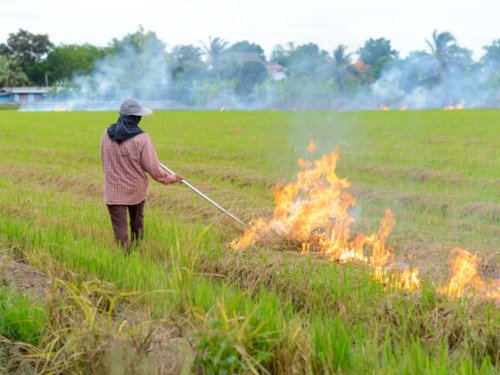
There are several reason why Chiang Mai suffers of smoke pollution for 1-2 months each year. The Most Common reasons.
- Farmers burning Crops
- Hill Tribe People Burning Forrest for Mushrooms
- Continental drift of other Fires
Compounding the situation is Geography: Chiang Mai is a Basin
Chiang Mai sits in a mountain valley, which makes things worse.
Surrounded by mountains → limits airflow
Smoke gets trapped close to the ground
Pollution accumulates instead of dispersing
1) Agricultural Burning (Primary Driver)
Farmers burn leftover crop waste (rice, corn, sugarcane) to clear fields quickly. It’s widely used because it is cheap, fast, and effective. Happens across Northern Thailand, Myanmar, and Laos because burning leftovers is free, the cost to dispose of waste without smoke equates to the same profit they make each year.
This releases large amounts of smoke and PM2.5 into the air
👉 Important nuance:
This is not unique to Thailand, it’s a common agricultural practice globally, but the scale and timing make it more visible here.
2) Forest Fires (Natural + Human-Caused)
Widespread forest fires, some are accidental or linked to land clearing (for Mushroom cultivation), some are intentional (e.g. hunting, forest management practices)
Dry conditions make forests highly flammable
These fires significantly increase smoke levels during peak months
For centuries many populations of stateless people exist and live in the forest areas. Because Thailand will not issue the people with Citizenship, they are unable to work, obtain loans, making the huge profit of an annual mushroom their major source of income.
3) Chiang Mai’s air is not just local.
It is not only farmers in Thailand who do not earn enough money each year to be able to remove waste in a less destructive manner. This is common with all farmers in Asia.
Smoke travels from Myanmar, Laos, and other parts of Southeast Asia
Winds can carry pollution hundreds of kilometers
Estimates suggest a large portion (30-60%) of background pollution is transboundary
👉 This is why even if local burning decreases, air quality can still be poor and other areas of Thailand like Bangkok and Phuket also have hazy days
Conclusions: Is it Safe to Visit Chiang Mai during Burning Season?
The current science says yes, it is safe for a healthy person to come to Chiang Mai during the burning season. In fact, there is no evidence that living in Chiang Mai and enduring the short term physical effects of the high PM2.5 will contribute to long term damage. What the evidence does suggest, is that for Infants, Elderly and people with pre-existing illness (especially Cardio-Vascular) the damage will be more and longer lasting.
Short term exposure to crop burning PM2.5 has a lower level of toxicity than the results from the long term studies of exposure to industrial waste PM2.5. However a percentage of the damage people are concerned about is from the size of the particle and not what type of particle it is. While we know that Chiang Mai’s AQI in burning season does not equate with toxicity levels of existing studies – it still presents a danger at the size of the particle spectrum.
The amount of damage living here is not known, it can only be guessed at. It can be guessed by what you see and how you feel about the situation politically. Or it can be guessed at using comparable data that studies already have access to. Either way, at this point it is a guess, based on science or based on emotions.
Should I cancel my visit to Chiang Mai because of the Smoke?
If you are coming here to look at the scenery and mountains, or engage in outdoor activities then probably yes. But only yes, if you are able to come at other times of the year. If this is your only opportunity then come and expect some visual limitations.
If you are thinking about cancelling your trip to Chiang Mai for safety reasons during to the high levels of pollution … Then No. While it can be uncomfortable for some, there are millions of people who don’t find it an issue worth complaining about on Facebook or making a video for clicks. Chiang Mai still has alot to offer, and well worth a small cough or eye irritation that will stop a few days after you leave – if it even manifests at all while you are in Chiang Mai.