
Sak Yant Designs below the Waist
What Sak Yant Tattoo can go on the Legs?
How to Choose Sak Yant Design Below your Waist
Sak Yant Designs are a combination of ancient pre-Buddhist animal based religious views and Buddhist imagery. In Thai Culture the lower parts of the body are considered less holy and not suitable for sacred Sak Yant Designs based on Buddhist influence. Only some Traditional Thai designs can go below the waist onto the legs - they are almost always Animal forms and Sak Yant Designs
Sak Yant Tattoo Designs Below the Waist: Which Designs Can Be Placed on the Legs?
If you are looking for a Sak Yant tattoo design below the waist, you may be surprised to learn that certain traditional Sak Yant designs can be placed on the thigh or leg. However, not every Sak Yant can be placed below the waist.
The traditional placement of a Sak Yant depends on several factors, including the design itself, its meaning, the sacred script or Katha associated with it, the blessing and the tradition followed by the Ajarn. While most sacred (Thai gods and Supernatural beings) and Buddhist-related Sak Yants are traditionally placed above the waist, certain animal-based Sak Yant designs can be appropriate for the legs.
At Sak Yant Chiang Mai, we are frequently asked which designs can be placed below the waist. This guide explains the traditional designs that may be suitable for the thigh and legs, followed by an explanation of why some Sak Yants can be placed below the waist while others cannot. In this article we will start by giving the and then the reasons and details for why.
Table of Contents
ToggleWhat Sak Yant Designs can go on the Legs
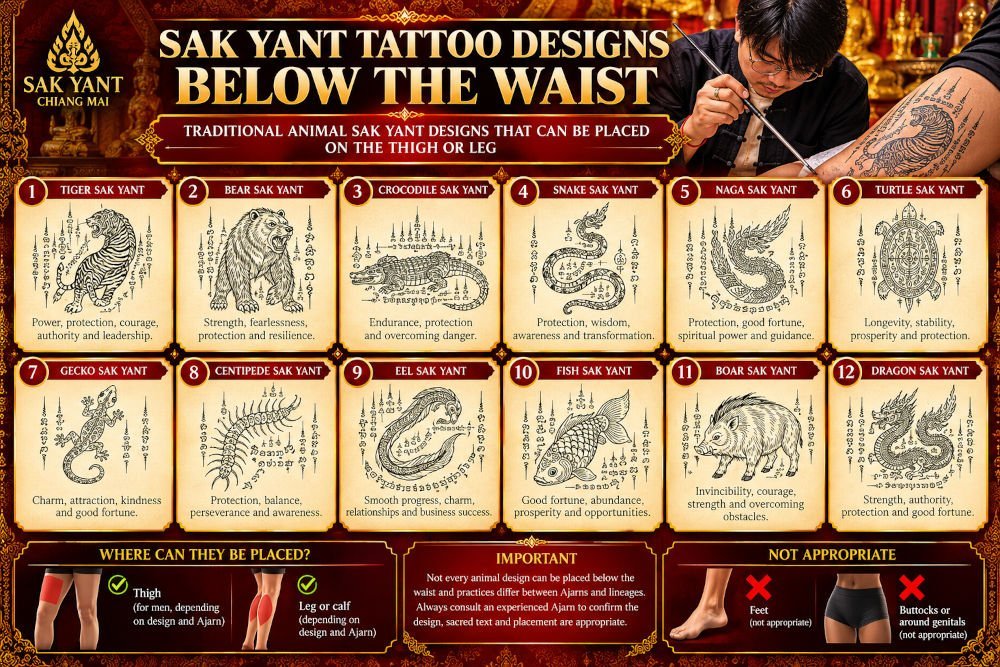
Most traditional Sak Yant designs are placed above the waist, particularly designs containing Buddhist imagery, sacred figures and certain powerful yantra designs. However, there are also traditional Sak Yant tattoo designs below the waist that can be appropriately placed on the thigh or leg when the design, sacred text, blessing and tradition allow it.
This is an important distinction. A Sak Yant is not simply a picture that can be moved anywhere on the body. The design, its sacred script, the Katha or magical formula, its blessing and its placement are all connected. An experienced Ajarn will consider these elements together when deciding whether a particular Sak Yant is appropriate for the leg
The most important thing to understand is that animal-based Sak Yant designs are the designs most commonly associated with below-the-waist placement. Depending on the particular Yant and the tradition of the Ajarn, designs that may be suitable for the thigh or leg include:
Tiger Sak Yant
Tiger Sak Yants are among the most recognizable traditional Thai tattoo designs. The tiger represents qualities such as strength, courage, authority, protection and power. Different tiger Yants have different meanings and traditional applications. Some tiger designs may be suitable for the leg, including certain versions of the single or paired tiger designs.
However, this does not mean that every tiger Yant should automatically be placed below the waist. The particular design matters. A Twin Tiger design might for example just be too large to fit on a normal persons thigh or leg
Bear Sak Yant
The bear is another animal Yant that can be appropriate for the leg. A bear Sak Yant is associated with strength, fearlessness, protection and physical or spiritual power. Some traditional versions are specifically associated with placement on the leg.
This makes the bear an interesting choice for someone who wants a powerful animal Yant below the waist without using one of the more commonly seen tiger designs.
Crocodile Sak Yant
The crocodile is associated with strength, endurance, protection and the ability to survive difficult circumstances. Crocodile Yants can be particularly well suited to the shape of the leg because the animal’s elongated body can follow the natural vertical shape of the thigh or calf.
Certain crocodile Yants may be appropriate for lower-body placement, although the exact design and accompanying Katha should always be determined by the Sak Yant master.
Turtle Sak Yant
The sacred turtle is traditionally associated with qualities such as longevity, stability, prosperity, fortune and protection. Some versions of the turtle Yant can be placed on the leg when appropriate. Because the turtle is a sacred animal design rather than a representation of the Buddha, it falls into a different category from Buddhist images that traditionally require higher placement.
Gecko Sak Yant
The gecko is another animal Yant that may be suitable for placement below the waist. Gecko Yants are commonly associated with charm, attraction, good fortune, relationships, persuasion and opportunities. Some versions can work particularly well on the thigh or lower leg because of their compact shape.
Snake and Naga Designs
Snake-related Yants require more care because there are many different forms of serpent imagery within Thai and Southeast Asian traditions.
Some snake and Naga designs may be suitable for the leg, while others have much more specific religious or symbolic significance and may be expected to remain higher on the body.
This is a good example of why simply looking at the picture is not enough. Two designs may both look like snakes but have completely different meanings, sacred texts and placement traditions
Eel Sak Yant
The eel is another traditional animal design that may be used below the waist. Eel Yants are associated with smooth progress, charm, kindness, good fortune and success in relationships or business. Their long, flowing shape can also work naturally with the anatomy of the leg.
Fish Sak Yant
Certain fish Yants can also be appropriate for lower-body placement. Fish designs are often associated with good fortune, abundance, prosperity and success. Some versions are particularly associated with wealth and business.
Centipede Sak Yant
The centipede is another interesting option for a leg Sak Yant. Its long body and multiple legs can create a design that naturally follows the shape of the calf or thigh. Traditional meanings associated with centipede Yants include protection, awareness, perseverance, balance and the ability to withstand difficulties.
Certain centipede designs are specifically presented by Sak Yant practitioners as suitable for placement on the legs.
This is not a universal list. Different Ajarns and Sak Yant lineages follow different traditions, and some designs have specific placement requirements. The important point is that a Sak Yant suitable for the leg is not simply an ordinary Sak Yant moved from the back to the thigh. The design, sacred elements and placement need to be considered together.
What about a Sak Yant on the Foot?
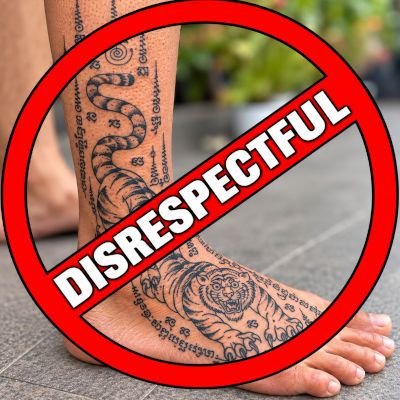
The feet are a different matter.
Traditional Sak Yant should not be placed on the feet. The feet are considered the lowest part of the body in Thai culture, and placing sacred Buddhist imagery or sacred script there is considered inappropriate and disrespectful.
Sak Yant Chiang Mai specifically states that the feet are strictly off limits. So while certain animal Sak Yant designs can be appropriate for the thigh or leg, this should not be interpreted as meaning that a sacred Yant can simply be placed anywhere below the waist.
There is an important difference between “below the waist” and “anywhere below the waist.”
What about Ed Sheeran's Sak Yant on His Leg
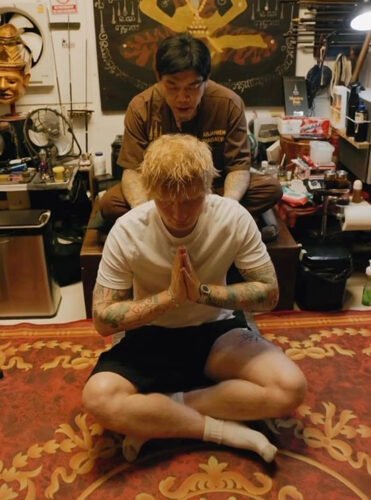
A well-known modern example of a Sak Yant specifically designed for placement on the leg is the tattoo received by Ed Sheeran in Thailand.
His Sak Yant was created by Ajarn Neng and was specifically designed for placement on his leg.
It combined elements of the Fon Saen Ha, or Rain Talisman, with the Itipiso Paed Tidt, the Eight Directions sacred text and blessing. This is an interesting example because it demonstrates an important point.
A traditional Sak Yant on the leg does not necessarily mean taking a standard upper-body design and simply moving it downward. The design, sacred elements and placement can be considered together.
In this situation Ajarn Neng used an image of a Sak Yant Tattoo that belongs on the upper body and replaced the magical text with spells that were not related to the original Buddhist Blessings and meanings.
You can read more at Ed Sheerans Sak Yant Tattoo Meaning
Why Can Some Sak Yants Go Below the Waist?
This is where the subject becomes more complicated. The answer is connected to Thai culture, Buddhism, traditional ideas about the body and the particular spiritual tradition of Sak Yant. Most people who see a Sak Yant for the first time assume that the rules are simply about where the tattoo looks good. They are not.
Traditional Sak Yant placement is connected to the spiritual nature of the tattoo.
The Importance of the Upper Body
In traditional Thai culture, the body is understood as having a hierarchy. The head is regarded as the highest and most respected part of the body, while the feet are considered the lowest. This has an important influence on the placement of Buddhist imagery and sacred objects.
A Buddha image, for example, is not treated in the same way as an ordinary decorative picture. The same principle applies to sacred Sak Yant designs. This is one of the reasons why many powerful Buddhist and sacred Sak Yants are traditionally placed on the back, chest, shoulders or upper arms.
Buddhist Influence on Sak Yant Placement
Sak Yant developed within a cultural environment strongly influenced by Buddhism, particularly Theravada Buddhism in Thailand. Traditional Sak Yant can contain Buddhist symbolism, ancient sacred scripts, yantra geometry, magical formulas and blessings.
Many designs also incorporate Pali or Khom script, while Northern Thai traditions may incorporate Lanna script. Because of this religious and spiritual connection, the placement of a Sak Yant is not treated simply as an aesthetic decision. A sacred image placed on the upper body is understood very differently from the same image being placed close to the feet.
This is particularly important with Buddha images and certain highly sacred Yants.
Why Are Animal Sak Yants Different?
This is one of the most important distinctions when discussing Sak Yant Tattoo Designs Below the Waist. Animal Yants can have powerful spiritual meanings, but they are not necessarily treated in the same way as a Buddha image or another explicitly Buddhist sacred figure.
A tiger, for example, can represent strength, protection, authority and courage. A turtle can represent longevity and prosperity.
A gecko can represent attraction and good fortune. A crocodile can represent strength and protection.
Because these designs belong to a different category of Sak Yant imagery, certain traditional versions may be permitted on the legs.
That does not mean that all animal Yants can go below the waist. It means that certain animal Yants have a traditional precedent for lower-body placement.
Can the Sacred Writing Be Changed for a Leg Sak Yant?
In some circumstances, sacred text and other elements may be adapted according to the particular Yant and its placement. However, this does not mean that an Ajarn can simply change the sacred writing however they wish.
Some traditional Yants have established forms, sacred texts and blessings that should remain consistent. Others have more flexibility. This is another reason why an experienced Ajarn is important.
The goal is not simply to make the tattoo fit the leg. The goal is to maintain the traditional meaning and spiritual purpose of the Yant while using a placement that is appropriate.
Frequently Asked Questions About Sak Yant Tattoo Designs Below the Waist
Can a Sak Yant tattoo go below the waist?
Yes, certain traditional Sak Yant designs can be placed below the waist, particularly selected animal-based Yants on the thigh or leg. However, most sacred and Buddhist-related Sak Yants remain above the waist.
Which Sak Yant designs can go on the legs?
Depending on the Yant and the Ajarn’s tradition, animal designs such as tiger, bear, crocodile, snake, Naga, turtle, gecko, centipede, eel, fish, boar, lion and dragon may be suitable for the leg.
The exact design is important, so there is no universal list that applies to every Ajarn.
Can I get a Tiger Sak Yant on my thigh?
Certain traditional tiger Yants can be placed on the thigh, particularly for men. The appropriate tiger design should be selected according to the Ajarn’s tradition.
Can I get a Sak Yant on my calf?
Yes, certain animal Yants can be suitable for the calf. Elongated designs such as snakes, eels, crocodiles and centipedes can work particularly well with the shape of the lower leg.
Can a woman get a Sak Yant below the waist?
Practices differ between traditions. At Sak Yant Chiang Mai, our traditional practice is not to place Sak Yant below the waist on women. This should always be discussed with the Ajarn performing the tattoo.
Can I get a Buddha Sak Yant on my leg?
Traditionally, Buddha images and many other Buddhist-related sacred designs should remain above the waist. They should not simply be moved to the thigh or calf because the location is preferred.
Can I get a Sak Yant on my foot?
No. The feet are traditionally considered an inappropriate location for sacred Sak Yant.
Can Khom or Pali writing be tattooed below the waist?
Some sacred writing may be appropriate for lower-body placement, while other sacred texts are not. The writing, Katha and blessing need to be considered as part of the complete Yant.
Is a Sak Yant on the leg still a traditional Sak Yant?
Yes, it can be. A Sak Yant is not defined solely by its location. The traditional design, sacred elements, Katha, blessing and the tradition through which it is performed are all important.
Can I bring my own Sak Yant design and ask for it to be put on my leg?
You can show an Ajarn a design that you like, but the Ajarn should determine whether it is appropriate for the intended placement. A design found online may not have the same traditional meaning or placement rules as you assume.