
The Sak Yant Ritual
The Sacred Rituals getting a Traditional Sak Yant Tattoo
The Sak Yant Ritual Explained
Sak Yant is more than a traditional tattoo. The tattoo itself is only one part of the process. A traditional Sak Yant combines the design, sacred text, ritual and blessing into a single spiritual practice. For someone experiencing Sak Yant for the first time, the ritual can seem unfamiliar. There are offerings to make, customs to observe, prayers to be recited and a final blessing that gives the completed Yant its intended spiritual purpose. The exact ceremony varies between Monks, Ajarns and lineages. There is no single ritual that every Sak Yant practitioner follows. However, the basic process remains similar.
Table of Contents
ToggleWhat Makes a Sak Yant a Sak Yant?
A traditional Sak Yant is created by a trained spiritual practitioner, normally a Buddhist Monk or Ajarn who has learned the tradition through a lineage.
There are three important elements:
The Sak Yant design
The Khata, or sacred text and prayers
The ritual and final blessing
The design is the visible part of the Sak Yant. It may contain geometric patterns, animals, deities, Buddhist imagery or other traditional symbols. The Khata is the sacred text associated with the design. It can include Pali, Khom or other traditional scripts and is connected with the prayers and magical knowledge of the practitioner.
The ritual brings these elements together. It begins with an offering and ends with the blessing of the completed Sak Yant. This is why a Sak Yant is not simply a tattoo design copied from a picture. The ritual and blessing are an important part of the traditional practice. For more details read the Article What is a Sak Yant Tattoo
Before the Sak Yant Begins

When you arrive for a traditional Sak Yant, the first part of the experience is preparation. Your design will normally have been discussed beforehand. The practitioner may also discuss your reasons for wanting the Sak Yant and the intention you would like associated with it.
This is important because the meaning of a Sak Yant is not necessarily determined by the picture alone. The design, Khata and blessing can be brought together to create a specific intention.
Traditional Sak Yant also requires an appropriate attitude. You are entering a sacred environment and should treat the Monk, Ajarn, temple or Samnak with respect.
Clothing should be modest and appropriate, and you should follow any instructions given by the practitioner.
Step by Step Sak Yant Ritual for getting a Traditional Thai Tattoo
1) The Wai
The Wai is an important part of Thai culture and is also used when approaching a Sak Yant practitioner. The hands are placed together and the head is lowered as a gesture of respect.
Within Sak Yant practice, the Wai can form part of the formal approach to the teacher or practitioner. In some traditions, three bows are made, representing respect for the
1) The Buddha
2) Buddhism and the Tradition of the Sak Yant
3) The teacher or Ajarn.
The important point for a visitor is simple: the Wai is not merely a formality before receiving a tattoo. It is a way of showing respect for the person performing the ritual and for the religious tradition in which the practice exists.
2) The Offering
An offering is commonly made before a traditional Sak Yant ritual. Depending on the practitioner and location, this may include flowers, incense, candles and a monetary offering. Other items may also be included according to the particular lineage.
Offerings have a long history within Thai religious practice and are not unique to Sak Yant. They are part of the relationship between the person making the offering, the religious setting and the teacher or spiritual tradition.
Research into Sak Yant rituals also records the use of offerings as part of the wider ceremonial process. A recent academic study of Sak Yant practice in Thailand describes ritual and belief as important parts of how the tradition is transmitted between generations of practitioners.
For visitors, the offering should therefore be understood as part of the ritual rather than as a payment for a tattoo.
3) The Tattooing
Once the ritual has begun, the tattoo is applied using the traditional method associated with the practitioner’s lineage. Sak Yant is traditionally hand-poked rather than produced using a modern electric tattoo machine.
The recipient normally remains still and quiet while the practitioner works. Prayers or sacred words may be recited during the tattooing. The words and designs can vary considerably depending on the particular Yant and the teachings of the master.
This is one of the major differences between receiving a traditional Sak Yant and simply having a similar design reproduced by a commercial tattoo artist.
4) The Khata and Sacred Words
One of the less visible parts of Sak Yant is the sacred text associated with the design. These inscriptions may use ancient scripts and languages connected with the religious traditions from which Sak Yant developed.
The text is often referred to as Khata, a term associated with sacred words, spells or prayers. It may be incorporated directly into the Yant or exist as part of the ritual surrounding it.
The meaning of the writing is not always obvious to someone looking at a photograph of a Sak Yant. What may appear to be decorative lines or symbols can have a specific religious or ritual significance to the practitioner.
This is one reason why copying a Sak Yant design from a photograph does not necessarily reproduce the original tradition. The visual design is only one element of the practice.
5) The Final Blessing
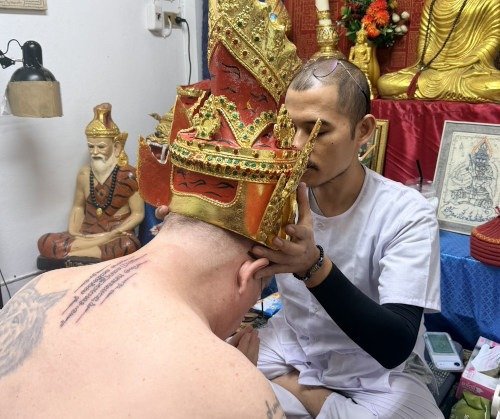
After the tattoo has been completed, the ritual does not necessarily end immediately. A final blessing will take place, during which the monk or Ajarn recites prayers or sacred words over the recipient and the completed Sak Yant.
The blessing is an important part of the traditional understanding of Sak Yant. Rather than viewing the tattoo as something that gains its significance simply because ink has been placed into the skin, the ritual connects the physical tattoo with the religious and spiritual beliefs surrounding it.
Different practitioners perform the final blessing in different ways. Some may place their hand over the recipient, while others may use a ritual brush or another sacred object. Chanting, prayer and other ceremonial actions may also form part of the blessing.
The exact procedure should not be assumed to be identical at every temple or with every Ajarn. Sak Yant is a collection of traditions passed down through different lineages, not a single standardized ceremony.
What Should You Do During the Ritual?
The best approach is to follow the lead of the Monk or Ajarn or the guides taking you through the experience. Remain quiet, listen to instructions and avoid unnecessary movement while the ritual is taking place.
Mobile phones should be put away unless the practitioner has specifically permitted photographs. A Sak Yant ceremony is not a performance arranged for visitors, and taking photographs should never become more important than the ritual itself.
It is also important to remember that a temple is a religious environment. Dress appropriately, show respect to monks and other people present, and avoid behavior that would be considered inappropriate in a Buddhist setting.
What about the Sak Yant Rules?
Many people researching Sak Yant encounter long lists of rules that are supposedly required after receiving a tattoo. Some lists contain unusual instructions about food, relationships, bridges, washing lines and other everyday activities.
The important thing to understand is that Sak Yant rules are not identical everywhere.
Different masters and lineages have different teachings. The Five Precepts of Buddhism are particularly important in many traditions, while individual practitioners may add their own rules or instructions. Academic research and documentation of Sak Yant practices show that ritual traditions can vary significantly between different practitioners and regions.
For more details you can Read What are the Sak Yant Rules?
Getting a Sak Yant from a Monk or Ajarn?
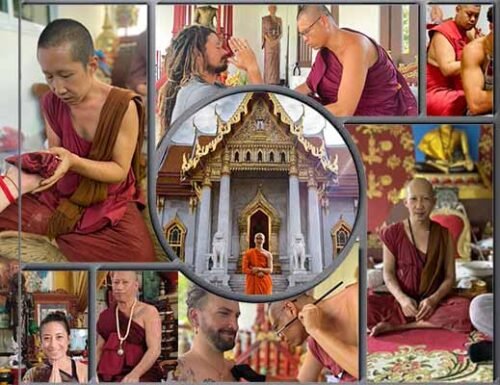
Sak Yant tattoos are traditionally performed by Sak Yant Masters, who may be Buddhist Monks or Ajarns. Becoming a Master involves learning sacred designs, Khata, prayers and rituals from an experienced teacher, often through years of Buddhist practice.
Many Masters begin their training as Monks, but some later leave the monkhood to marry, raise families or pursue other responsibilities. These practitioners may become Ajarns, continuing to perform Sak Yant and provide spiritual guidance within their communities.
The main difference is that Monks remain part of the Buddhist monastic community and follow the strict rules of monastic life. Ajarns live as members of the wider community and therefore have fewer restrictions on everyday activities. Both can belong to established Sak Yant lineages and carry knowledge passed down through generations.
Sak Yant Tattoo by Ajarn
- Former Monks, now full time Shamans
- Females OK
- Less formal and more relaxed situation
- Able to take photos and videos
- Sak Yants for personal desires allowed
- Wider range of Magical skills
- Include Thai Magic as well as Buddhist Blessings
Sak Yant Tattoo by Monk
- Unable to preform Sak Yant on Females at a Temple (is able at our In-House Service)
- More formal approach, requiring stricter protocols
- Can not take photos of the Sak Yant getting done
- Sometimes busy preforming Monks duties at Temples
- Some designs are off limits due to personal over spiritual magical blessing
The Sak Yant - A Sacred Experience, Not Just a Tattoo
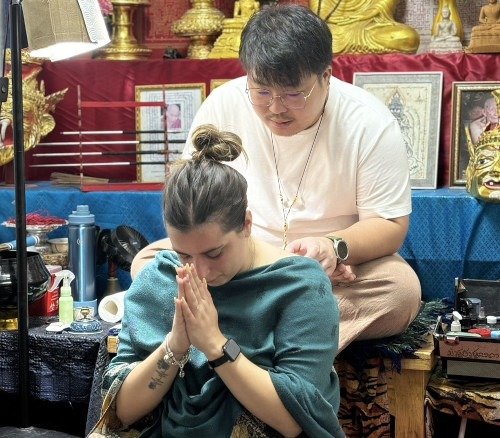
For visitors to Thailand, receiving a Sak Yant can be a memorable experience, but it is worth understanding what you are participating in before you arrive.
Take the time to learn about the design, listen to the practitioner, dress appropriately, respect the temple or sacred space and allow the ritual to take place without treating it as a tourist performance.
The tattoo itself may be the part that remains visible for the rest of your life, but the traditional Sak Yant ritual is about much more than the image on your skin. It connects the recipient with a living tradition of religious belief, sacred art, teaching and ritual that has continued to develop within Thai society.
Understanding the ritual is therefore one of the best ways to understand Sak Yant itself.
Why the Blessing Matters
For someone unfamiliar with Sak Yant, it can be tempting to concentrate entirely on the finished tattoo. The design is, after all, the part that can be photographed and easily understood.
The ritual is less visible, but traditionally it is just as important.
The offering, Wai, prayers, tattooing and final blessing form a sequence that places the tattoo within a particular religious and cultural tradition. The physical design remains on the skin, but the ritual provides the cultural and spiritual context in which the design is understood.
This is also why a Sak Yant should not simply be treated as a decorative tattoo copied from the internet. Without understanding the design, sacred text, practitioner and tradition behind it, much of what makes the practice distinctive can be lost.
Sources and Further Reading
| Source | Type | What It Covers |
|---|---|---|
Sak Yant Chiang Mai | Practitioner and cultural resource | Information about traditional Sak Yant practice in Northern Thailand, including the role of the Monk or Ajarn, ritual, offerings, Khata, blessings and appropriate etiquette. |
Angela Marie May, University of Alabama at Birmingham | Academic thesis | Examines the development of Sak Yant and the relationship between Indic yantras, Buddhism, Hindu traditions and animist beliefs in Thailand. |
Chariti Khuanmuang, “Sacred Tattoos: Construction of Identity” | Academic research | Research into the changing meaning of sacred tattoos in contemporary Thailand, including religion, identity, globalization and the movement between traditional and modern interpretations. |
Chanat Watthana and Srisakul Chaiwiang, “Study and Analyze the Buddhist Context through the Sak Yant Ritual” | Academic research | Examines the Buddhist context of Sak Yant rituals, including chanting, transmission of knowledge between masters and the development of the Wat Bang Phra tradition. |
Isabel Azevedo Drouyer and René Drouyer, Thai Magic Tattoos: The Art and Influence of Sak Yant | Book / field research | An extensive study of Sak Yant, its history, yantra and mantra, masters, tattooing traditions, beliefs and the annual Wai Khru ritual. |
Drouyer and Drouyer, River Books | Reference book | Documents the artistic, cultural and religious traditions surrounding Thai sacred tattoos and their continuing development in Thailand and beyond. |
This article combines academic research, published books and information from practitioners.
Sak Yant traditions vary between individual monks, Ajarns, temples and lineages, so the ritual described here should be understood as a general explanation rather than a universal ceremony followed everywhere in Thailand.